
OpenKyrozen is an experiment in making an AI agent improve through the work it already performs.
The question behind the project
Most coding agents are useful for a single request and forget the shape of the work when the request is finished. OpenKyrozen starts from a different question: what would an agent look like if every interaction could become part of its future capability?
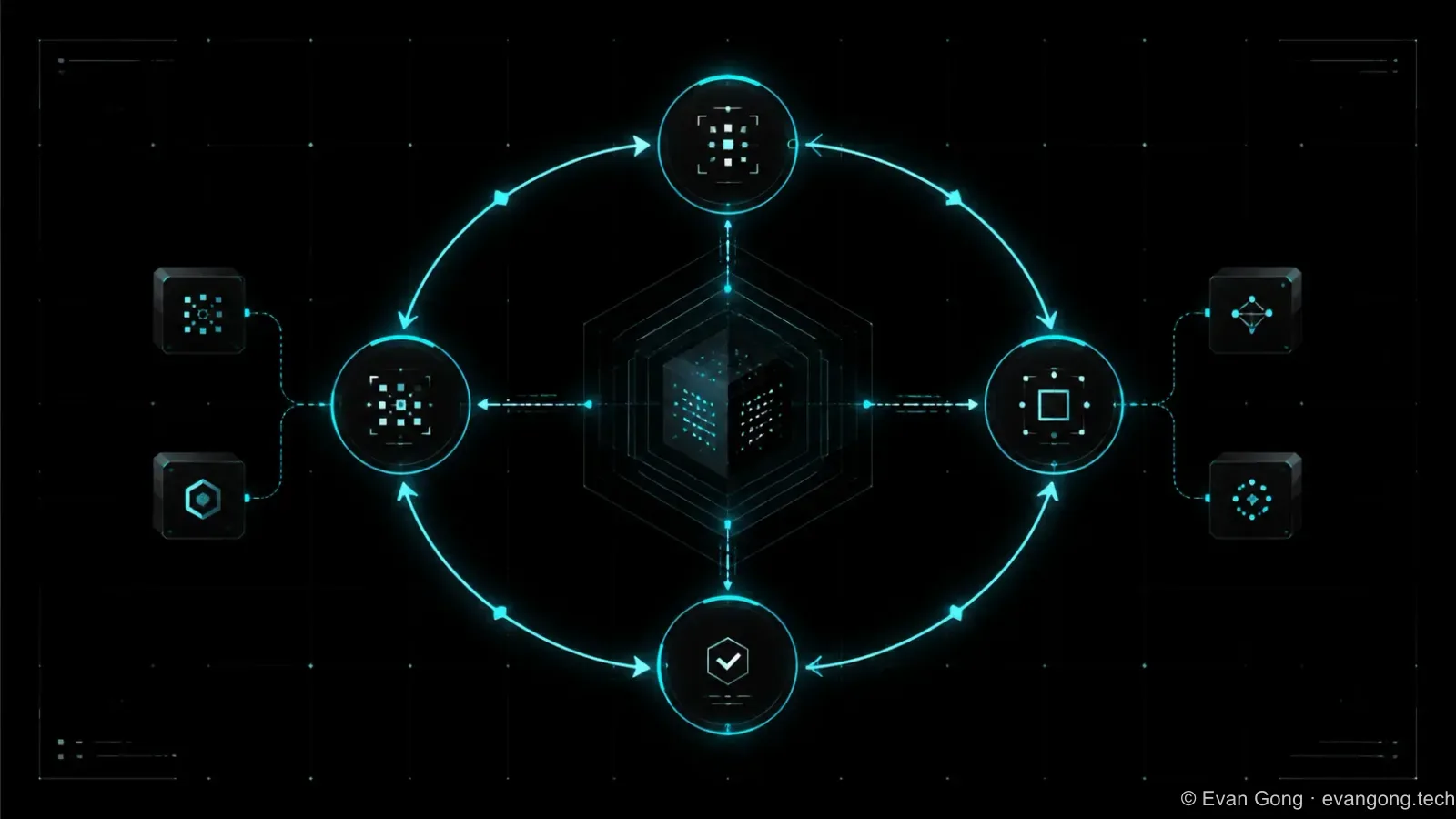
The project is a terminal-native, autonomous AI agent. It can operate on a filesystem, manage Git repositories, diagnose bugs, and use a growing set of tools. The interesting part is not one individual tool. It is the loop around the tools: observe a task, take an action, verify the result, and preserve what was learned.
From action to memory
OpenKyrozen treats knowledge as something earned by interaction rather than a static prompt attachment. Its self-learning features extract useful facts, invent reusable skills, and distill strategies from completed work. Those pieces can then become context for the next task.
That design makes memory a product surface. A memory entry should be attributable to an observation, useful in a future decision, and safe to update when new evidence disagrees with it. The project also builds a knowledge graph so the agent can retain relationships instead of only isolated notes.
A repair loop with a finish line
The bug-fixing workflow is deliberately explicit:
- Reproduce the problem.
- Diagnose the likely cause.
- Form a hypothesis.
- Apply a focused fix.
- Verify the result.
- Explain what changed.
The sequence matters because autonomous action without verification is only fast guessing. A useful agent needs a stopping condition that is visible to the person supervising it.
What I am learning
The hard part of a self-learning agent is not making it generate more text. It is deciding what deserves to survive an interaction. OpenKyrozen is therefore as much an experiment in evidence and maintenance as it is an experiment in model capability.
The current system includes a Web UI, REST API, Docker and package workflows, and MCP integration. The long-term goal is a system that can become more capable without becoming less understandable.
The agent should remember the work, not merely the words around it.